Paradise spreads round
Sitting by a pond while nothing happens; plus, there's burger pie in the Village News
Hi. How are you doing?
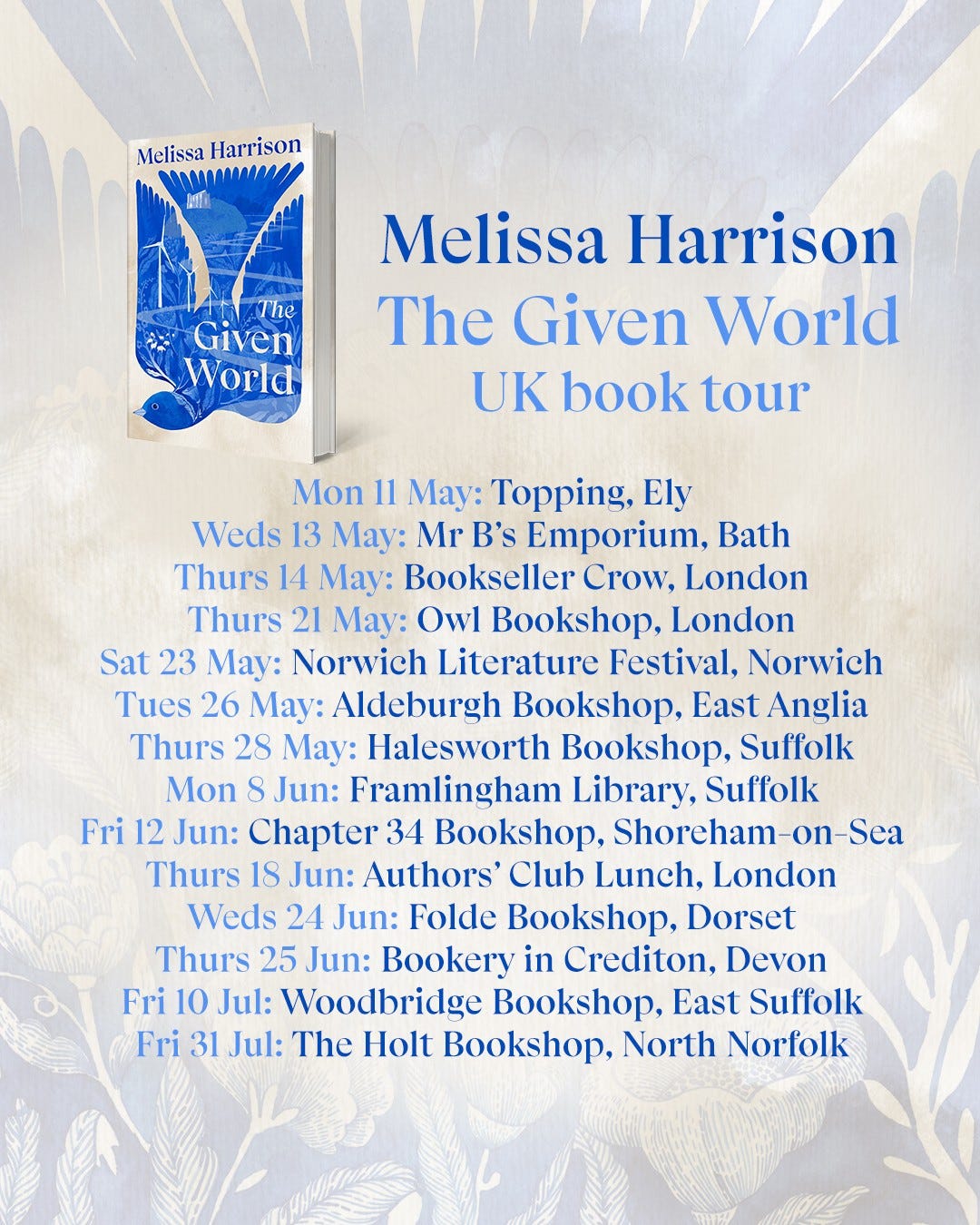
Last month I said there wouldn’t be a newsletter in May – yet here we are! Writing that was a way of taking the pressure off myself in the run-up to the publication of The Given World, but secretly I was hoping there would be enough time between all the other things I’m supposed to be doing to put something together. And there was!
Welcome to the May edition of Witness Marks. If you’re new here and would like a quick tour of the village (and the newsletter), start by reading this post here.
Witness Marks goes out on or around the 15th of each month; in between times you can find me chatting away in Substack Notes. The first part is free, while the second part, the Village News, sits below a paywall. A subscription to that costs £3.50 a month if you pay via Substack Desktop (Apple add a bit on top if you pay via the app). Subscribers can also access all the back issues of Witness Marks, AND they can listen to me read out and discuss my first novel, Clay.

I wasn’t expecting any reviews of The Given World until the weekend after publication on May 14th, or at the earliest, the weekend before. But on May 5th the first one appeared in The Guardian, by the writer and academic Alexandra Harris whose book The Rising Down I read last year and absolutely loved. I’d have missed it altogether, only someone on Instagram mentioned it: instantly I was flooded with adrenaline, my heart in my throat, my spine rigid. I almost couldn’t bear to read it at all.
“The Given World follows the inhabitants of one village in a river valley, a place ‘as old as anywhere’, for six months between the equinoxes of a year. The time is now, or an imminent future when the seasons seem to have ‘ceased their metronome’. At first, the central figure appears to be Clare, who knows each flagstone of the ancient priory that has been the centre of her life. The six months are her dying time, from diagnosis to last thoughts. But, in a way that pays tribute to the solitary Clare’s understanding of interconnectedness, the novel goes out from the priory to trace a web of lives. In the breezeblock bungalow next door, a desperate farmer tunes in at dawn to American evangelists on the radio. Like Saj the postman, we call at addresses where literary fiction rarely bothers to ring the bell.”
It is a very unsettling experience to expose your actual soul over 70,000 words and have it rated in the national press (even if it gets a good score). But bloody hell, what a review: I’m not sure I’ve ever had someone get what I’m trying to do in the way that Harris has, and I feel so grateful for it.
A couple of days later the FT published their review, which I’m also very pleased with. But now to find out how it lands with the people who matter most: its readers. You!
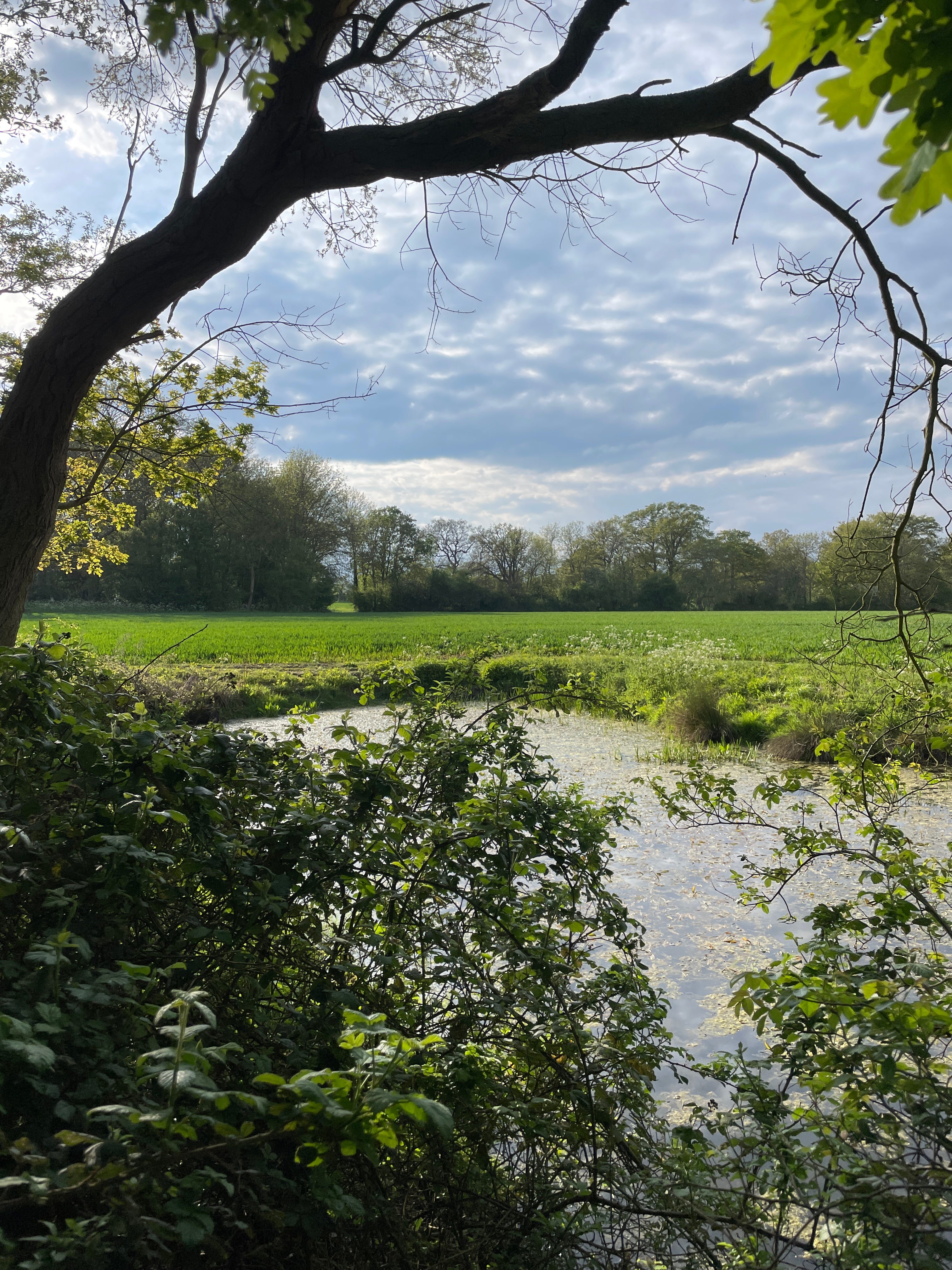
May has become, as I’ve got older, by far my favourite month of the year. It truly takes my breath away, the surging forward, the green growth, the feeling of hope and possibility and all the much-missed and now returning birds. There’s a sense of relief at life doing its miraculous thing once more, but these days the joy comes with an undertow of almost exquisite sadness. How many more springs will I see – or will there be?
There’s no answer to that, of course, except to go out and wade around in it, to drink in its smells and sounds and take in every detail, from the way the setting sun lights a stand of cow parsley to the unsettling scent of hawthorn, and from the sound of the first swifts screaming in overhead to the good feeling of warm spring sun on your skin. Sometimes it’s almost unbearable. Sometimes I can’t believe that I get to be alive and to witness the world unfolding in all its damaged beauty once again.
Lines from Elizabeth Jennings’ tender, grief-struck poem ‘Into The Hour’ come to me often at this time of year:
The apple-blossom's handsome on the bough
And paradise spreads round. I touch its grass.
I want to celebrate but don't know how.
After I’d read the Guardian review I felt a bit overwhelmed, so I did what I usually do at such times and took myself off outdoors. What I wanted was not so much to be walking but to be enclosed somewhere green and rich in life and private, somewhere that didn’t care about me, so that for a little while I could feel myself disappear.
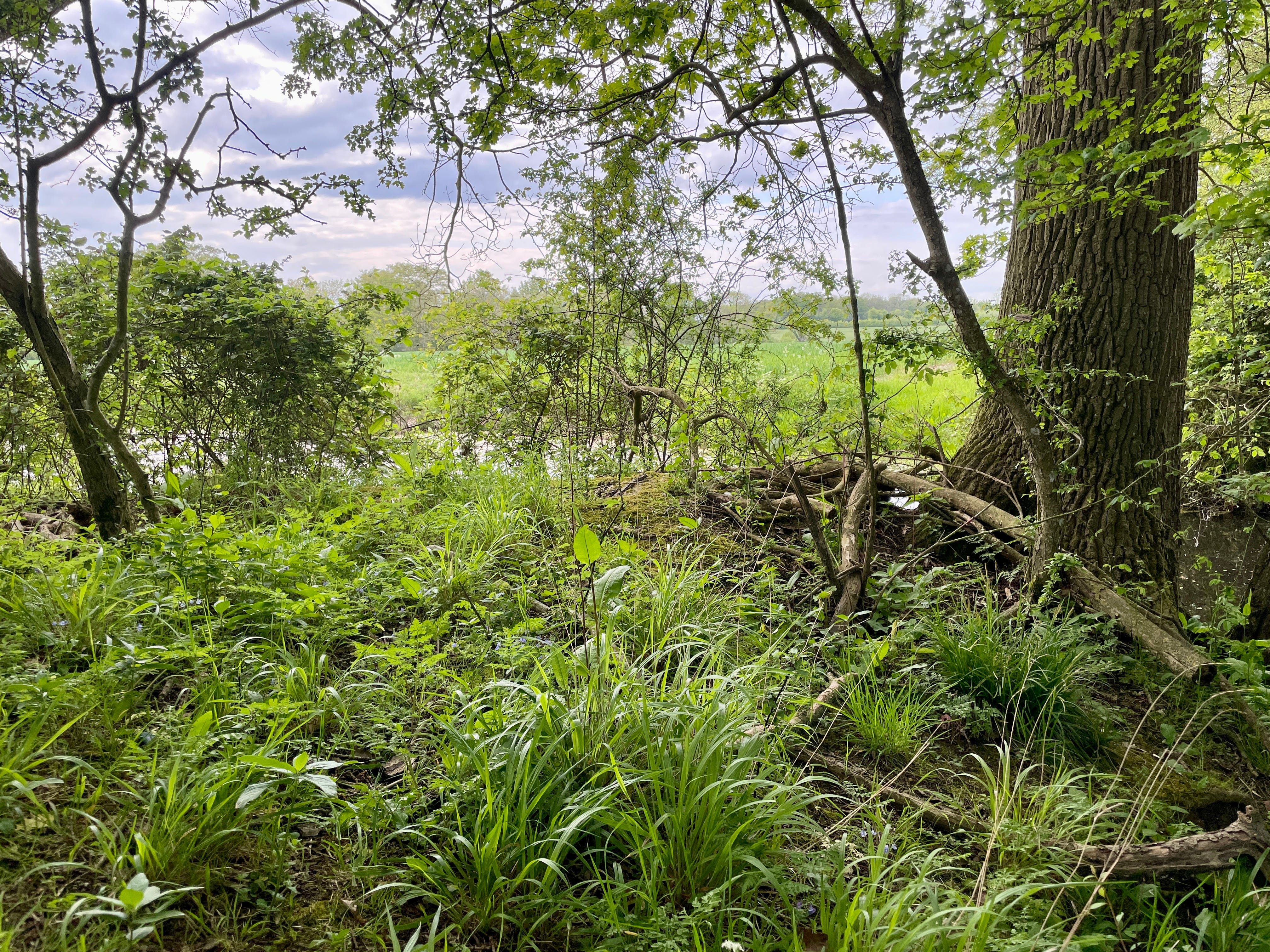
I made for the Fairy Wood, a little copse surrounded by fields that has a narrow, winding path through it (hence the name the village children have given it) – and once under its canopy I remembered that at one of its margins lies a pond. As it’s not visible from the right of way I’d forgotten all about it – but I knew that it was exactly where I wanted to be.
I sat on its sloping banks, almost completely hidden by foliage, and waited until everything close by had forgotten I was there. The wren which had sounded the alarm at my arrival ceased its loud ticking and sang again. A pair of mallards splashed down and swam about. I heard, but didn’t see, a shrew squeaking in soprano as it dashed about in the leaf litter on a mad, unceasing quest for food. The sun sparkled on the water, the ducks spoke quietly to one another. Nothing happened. It was wonderful.

At the end of April I wrote a piece for The Times about the need to change the way we feed the birds. People got very exercised about it in the comments, with one man believing (incorrectly) that the blackbirds he feeds via a bird table would actually die if he stopped.
The thing is, I can understand people’s resistance: we don’t only feed the birds for their benefit, but for ours – though that’s something many of us would struggle to admit. Growing plants from which garden birds can forage naturally doesn’t create such a direct reward pathway between our actions and their resulting behaviour, a pathway which makes us feel generous and beneficent and, well, a little bit godlike. Yet feeders crowded with birds not only spread disease but gather them helpfully together for predators; is our viewing pleasure really more important than the risk to their lives? It’s an obvious ‘no’ from me, but then I think of the solace my dear old dad took from his bird table at the end of his life, and I wince.

Every time I post something on Instagram and couple it with music from The Stubborn Light of Things podcast I get messages from people in raptures about it – and rightly so. I thought I’d remind you that you can buy the soundtrack via Peter Rogers’ Bandcamp page and keep it forever, for just £7. You can also download the entire Stubborn Light podcast from the same place and pay whatever you like for it – or nothing, if you prefer. It was a gift to the world back then, and remains so.
Three things that aren’t on screens
Each month I collect together three things that have interested me, for good or ill, and which can be found in the world beyond your phone or laptop:
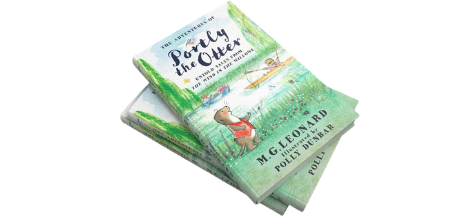
👉🏼 A nice thing: The Adventures of Portly the Otter: Untold Tales from The Wind in the Willows is a delightful new book from the brilliant M. G. Leonard, children’s nature writer par excellence, and the illustrator Polly Dunbar. Portly is mentioned in TWintW, but here Leonard makes him her main character: a curious little otter who is (at first) frightened of water. Leonard is a fantastic storyteller and I am (obviously) all for updating classic children’s books in this way. The indie bookshop edition has sprayed page edges, which I am insanely envious of. Order a copy here.
As a side note, otters are, in fact, born not knowing how to swim, and must be taught – perhaps evidence that their aquatic lifestyle is relatively new, evolutionarily speaking. Water voles are thought to have taken to rivers and streams even more recently, and lack the adaptations otters have, such as webbed paws.
👉🏼 An interesting thing: Does a film at the cinema count as ‘not on a screen’? I’ve decided (somewhat idiosyncratically) that it doesn’t because it’s a real-world outing to experience some culture, not two hours spent scrolling the interwebs. I went to see Mark Jenkin’s new film Rose of Nevada, a time-slipping marine mystery set, as all his films so far have been, in coastal Cornwall. Made with the assistance of film students, shot on colour 16mm, developed by hand and with the dialogue and ambient sound dubbed on afterwards, it is odd, dreamlike and challenging – in a very good way. There’s a genuinely scary scene of a near-disaster at sea that had me leaning forward tensely in my seat: how it was shot using a literal clockwork camera (a Bolex) is anyone’s guess. Guardian review here.
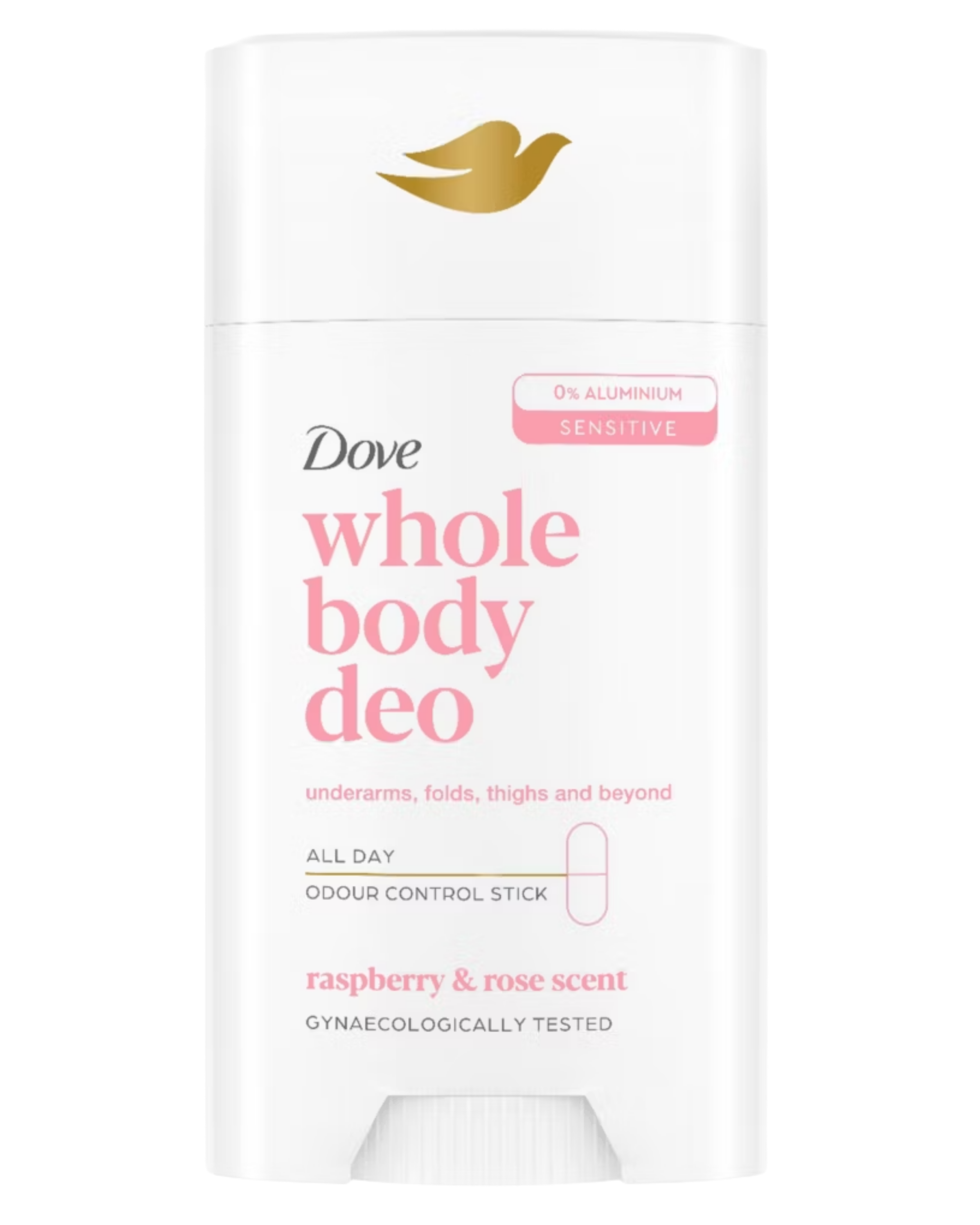
👉🏼 A thing that made me go ‘hmm’: the inexorable rise of men’s and women’s ‘whole body’ deodorant, ie nasty chemical fragrance for your Parts. I mean: could we just not? Just once, and particularly for the sake of the younger crowd, could we collectively decide: you know what, we’re all fine as we are, without your ‘helpful’ new product: this time we’re actually not going to extend the range of bodily things we need to fix/fear/feel paranoid about/be forced to take a position on.
No? Oh.

Anyway, that’s it for the first, free part of this issue of Witness Marks; below the paywall you’ll find the Village News, including: SILLY COW, SLOW DUCKS, GOD CAKES and an extremely satisfying HAM SCANDAL. If you’d like to subscribe but £3.50 feels like a stretch, reply to this email (if you’re reading this in your inbox) or send me a private message on the Substack website. No questions asked.
If you don’t want to subscribe but you’d still like to support my various endeavours, you can leave me a tip by going here. Thank you!