Some places still and warm
Snowlight, fen skating and the shelter of stories; plus Christmas carol chaos in the Village News
Hi, how are you doing?
Welcome to the January edition of Witness Marks. If you’re new here and would like a tour of the village (and the newsletter), start with this post here. And if you haven’t yet got round to reading last week’s post about what really constitutes warm clothes in the countryside (and a proper torch, and several other things) you can catch up via the link below; it’s free, but will auto-paywall on February 8th. It’s proven to be a really popular one!


Witness Marks goes out on or around the 15th of each month; in between times you can find me chatting away in Substack Notes. The first part is always free, while the second part, the Village News, sits below a paywall. A subscription to that costs £3.50 a month if you pay via Substack Desktop (Apple add a bit on top if you pay via the app). If that feels like a stretch, reply to this email, or send me a private message on the Substack website. No questions asked.
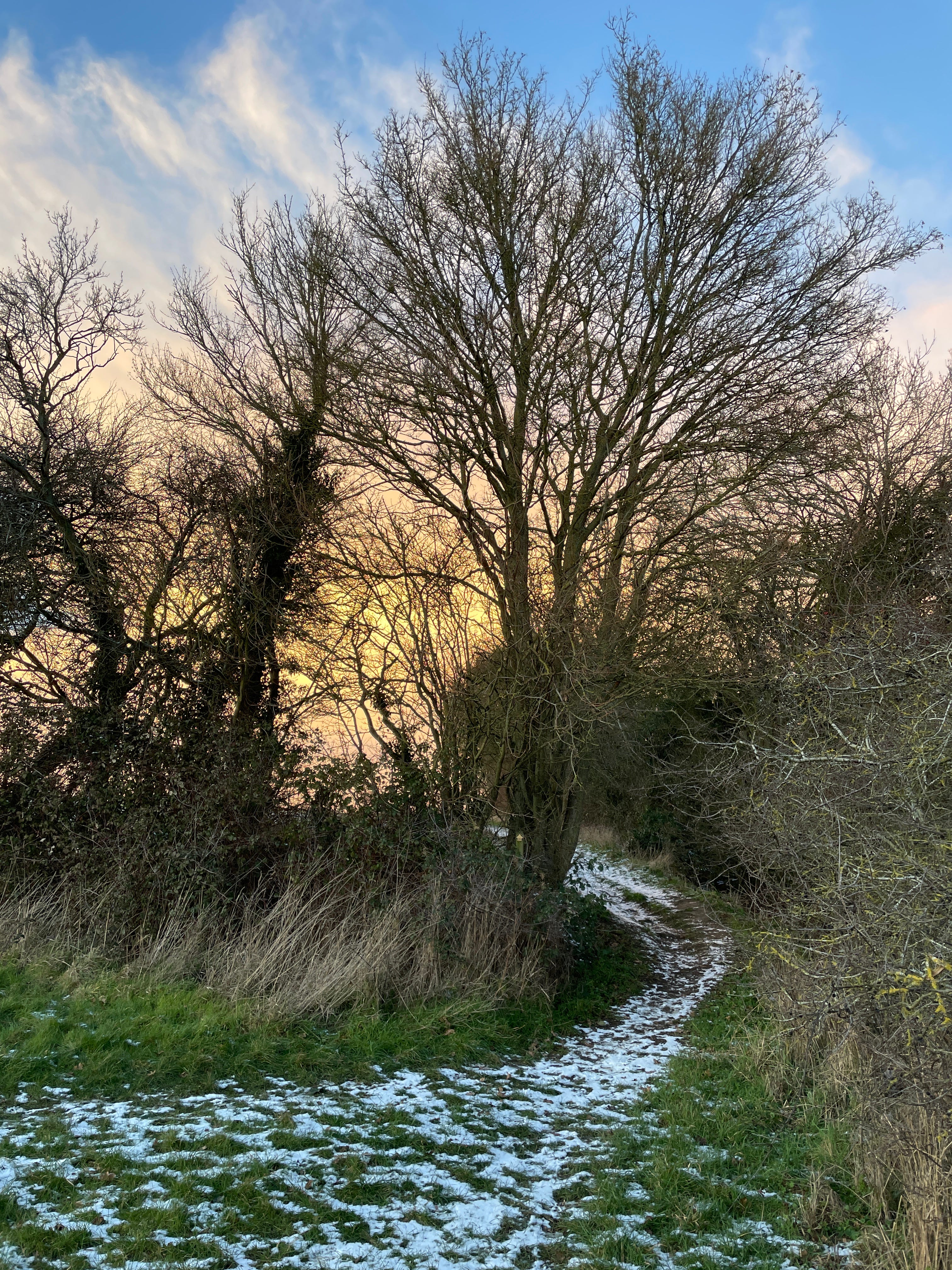
We’ve had some proper winter weather, and I could not be more pleased. This despite the soaring heating bill, the cost of extra firewood, the days spent working under a heated blanket on the sofa because the study costs £8 a day to heat and without a radiator on remains at a stubborn 8 degrees C; despite the chore of hoovering condensation every morning from single-glazed, metal-framed cottage windows or, occasionally, waiting for the ice on the inside of the panes to thaw.
Our narrow village lanes remain ungritted through frost and snow, unless one of my neighbours flings some salt around themselves, so getting the car to the relative safety of the B-road has meant rolling it slowly, cautiously, in low gear. As an anxious driver I’m not a huge fan of this (I do know to steer into a skid, but tell that to my reflexes) so I ordered a big Sainsbury’s shop to be delivered by their far more confident driver, and have largely been hunkering down and staying put.
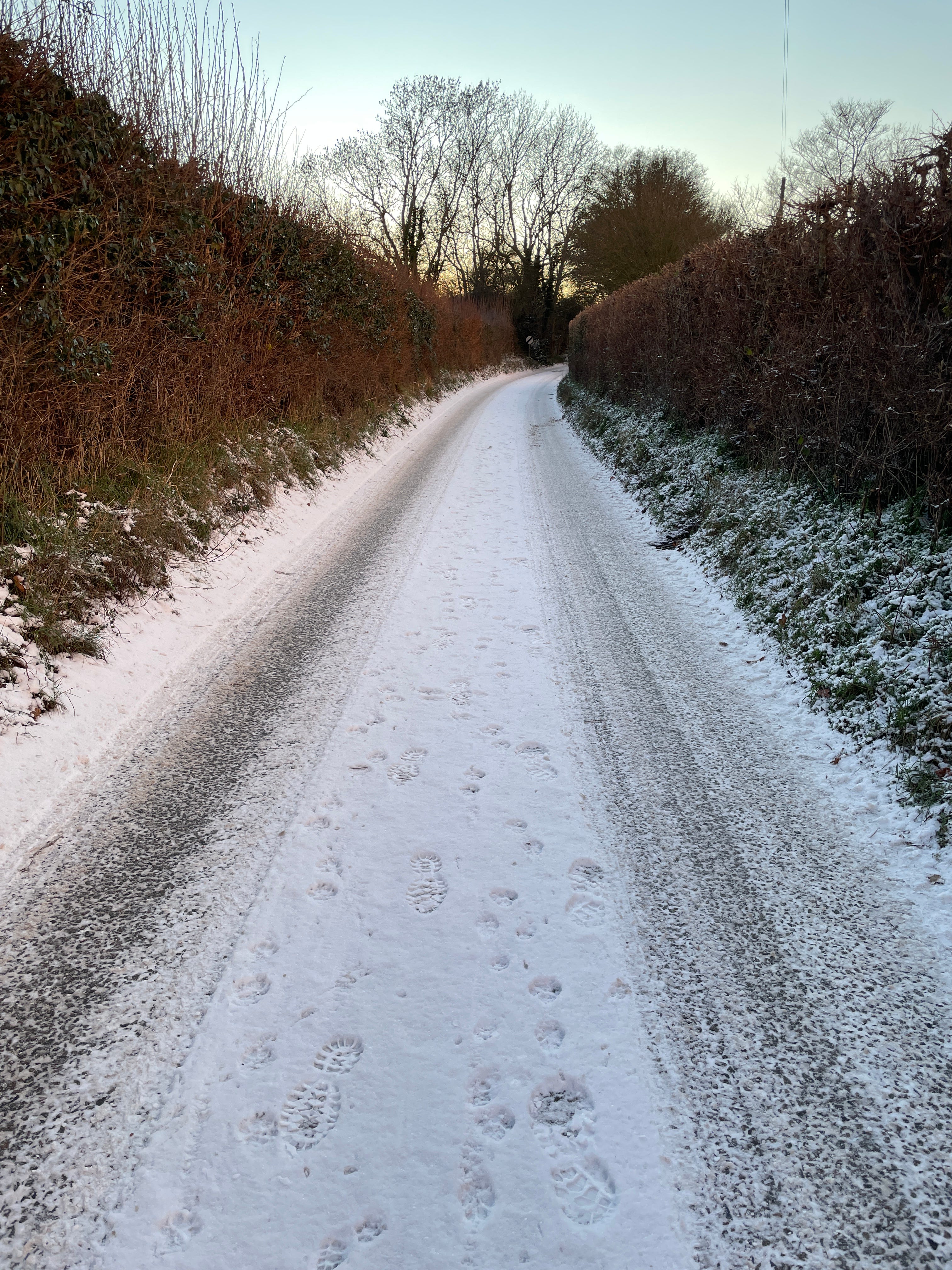
And I am glad: glad that the bastard mosquito which bit me five times on the calf in December, for god’s sake, will now, rightly, be dead; glad that the arable, livestock and garden pests, parasites and weeds which should be killed off by winter won’t make it to spring and multiply out of hand; glad for the spring bulbs that require a period of deep cold in order to germinate; glad that the soil’s structure will be broken up and made friable by frost, as it should. Winter is a vital part of the year’s cycle, one which native plants and animals have long become adapted to. We need it as much as we need spring rains and days of summer heat.
Of course, I’ve still been going out for walks and even the odd run, though the field paths too turned treacherous: feet churned the earth to mud and the mud there froze, melted, and refroze again. I’ve had to balance my desire for a PB (and to get quickly back inside) against the very real risk of stacking it, and caution has largely prevailed.
And every time I’ve gone out there have been fieldfares: chchacking from the hedgerow oaks, feeding on the beet fields, flying in small bands overhead. ‘In the bitterest day that ever blew,’ wrote John Clare,
The walk will find some places still and warm
Where dead leaves rustle sweet and give alarm
To little birds that flirt and start away.
One afternoon I layered up in coat, gloves and knitted hood and headed out at about 3.30: the hour or so before sunset is one of my favourite times to walk, and one of the best times to see wildlife, too. I turned at one point and saw that behind me a vast, dense cloud was building and flattening at its apex so that it loomed over the now-distant tower of the village church like a Hokusai wave. Then, as my route took me slowly back towards the village the light began to change: I was now under the cloud which was turning the sky a strange, bilious colour. I took out my phone to take a snap and found that the screen was struggling to adapt to the ambient conditions, too, cycling manically from bright to dim, warm to cool. The cloud looked yellow to me, but when I filmed it it was bright pink; then an icy wind got up and within moments, flakes of snow began to whirl around me as it let go its cold burden. It was a strange, intense experience.
A day or two later we had about an inch of rain overnight, melting the snow and pushing our little river up and over the banks into its watermeadows. I went out with a friend and her dog, our route taking us across it on the road bridge; on one side the river’s course was no longer legible, lost among silt-brown channels and lakes. We found we couldn’t re-cross it to get home: not at the wooden footbridge, nor at what I still call the ‘cow bridge’, though there have been no cows on that part of the meadows since a year or so after I moved in. We had to walk to the next village and take another road bridge back.
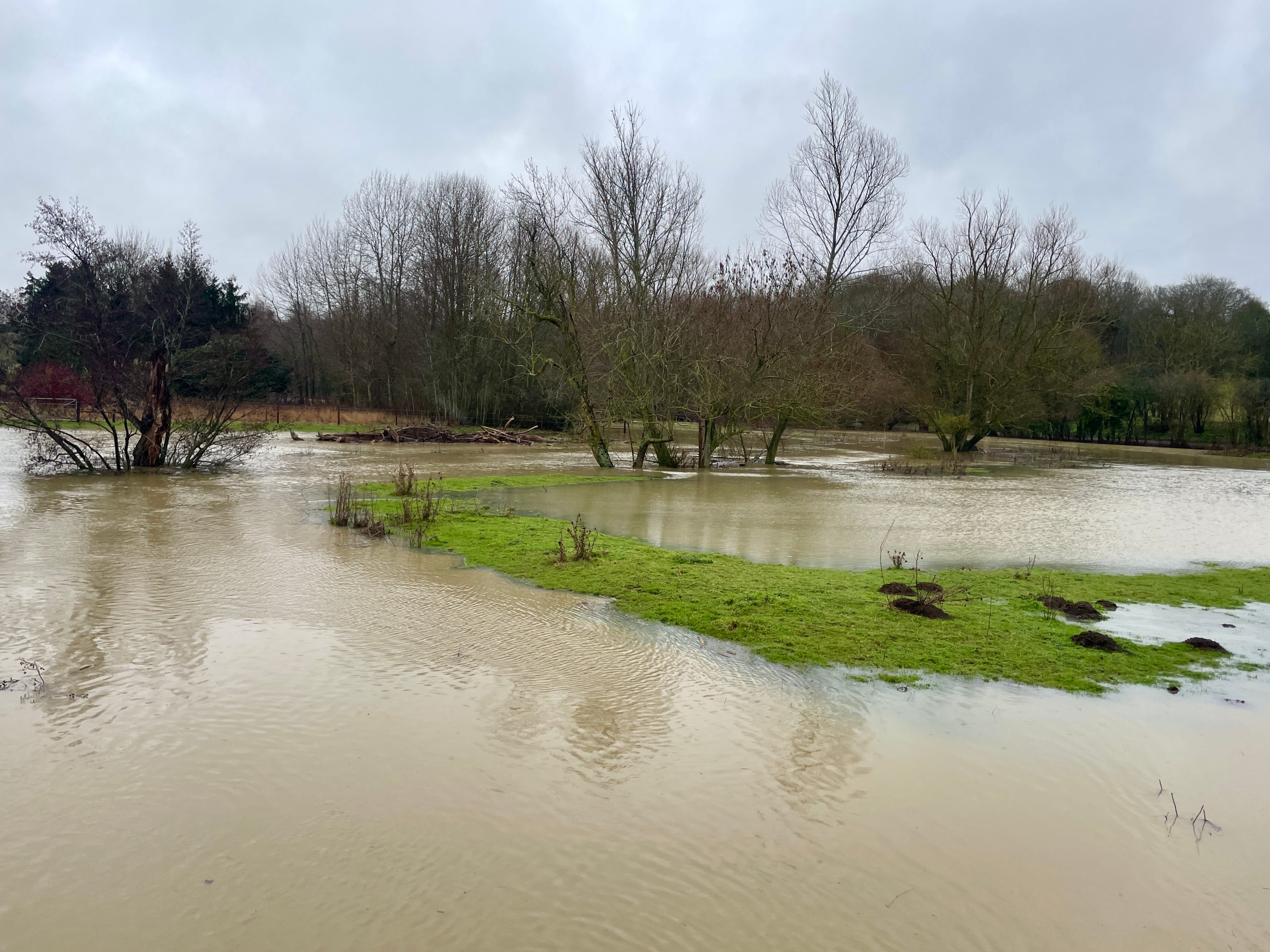
And still it rose: the next morning the watermeadows were a sheet of sky-reflecting silver, the black trunks of trees emerging between scattered grassy tussocks. Mallards floated and a heron turned its back and beat lugubriously away from where I stood with my binoculars; I hoped for visiting waders, even the egret that I often see there, but there must have been richer pickings elsewhere. That night the floodwaters froze, albeit thinly, for what would prove the last time in that particular cold snap; just two more sub-zero nights and freezing days and we might have had the conditions for fen skating, a once-popular winter sport and East Anglian cultural tradition, now lost to modern farmland management – and climate change.
‘Skaters’ days are epic days,’ wrote Adrian Bell in a column for the Eastern Daily Press, probably filed in 1963. ‘As soon as ice will bear, everybody who skates, or has skated, starts to reminisce. Said one to me, “The ice was like green grass, and we could see the water-weeds waving underneath us.” Said another, “The ice was so clear you could see the fish in the lake.” Another, now elderly, remembers a certain Squire X who, when his lake froze, came on it among the villagers wearing a special pair of skates. A portion of the lake was left clear for him, and on this he proceeded to execute pictures with his skates, like one engraving on glass.” (Collected in A Countryman’s Winter Notebook, published by Slightly Foxed)
Even 80 years ago Bell sounded elegiac, yet little was he to know that winters would warm so fast that fen skating – a mania in the late Victorian period when spectators and participants would come from as far afield as the Netherlands when conditions were right – would all but disappear during the course of his son, Martin Bell’s, life. No fen skating championships at all have been held since 2010; meanwhile, the long ‘fen runner’ skates have gone from where they hung in the stables and outbuildings, appearing occasionally in local antiques shops; and the intangible heritage – the skills and knowledge – that made the pastime possible have slowly disappeared.

The new year began, as it always does, with previews of some of the books that will be published in 2026 – including a couple of mentions of my fourth novel, The Given World. The Weekend FT said, ‘The connection between people and place is at the heart of this novel, where the residents and natural features of an ancient valley are struck by uncanny events’, while Alex Preston in The Observer wrote, ‘May is ushered in by the great British nature writer and novelist Melissa Harrison. The Given World is a dark pastoral, where the river misbehaves and villagers share a recurring, uncanny dream. Through multiple voices, Harrison conjures a community sensing that something has shifted, writing about the English countryside and its people with her customary distilled intensity in a book about change and belonging in an apparently unchanged landscape.’
I don’t know about ‘great nature writer’ given how long I spent today trying to identify what I’m still not completely sure was a bar-tailed godwit, but I’m very grateful for the rest. I’m also opening a book on how many times the word ‘uncanny’ gets used in reviews.
Three things that aren’t on screens
Each month I collect together three things that have interested me, for good or ill, and which can be found in the world beyond your phone or laptop:
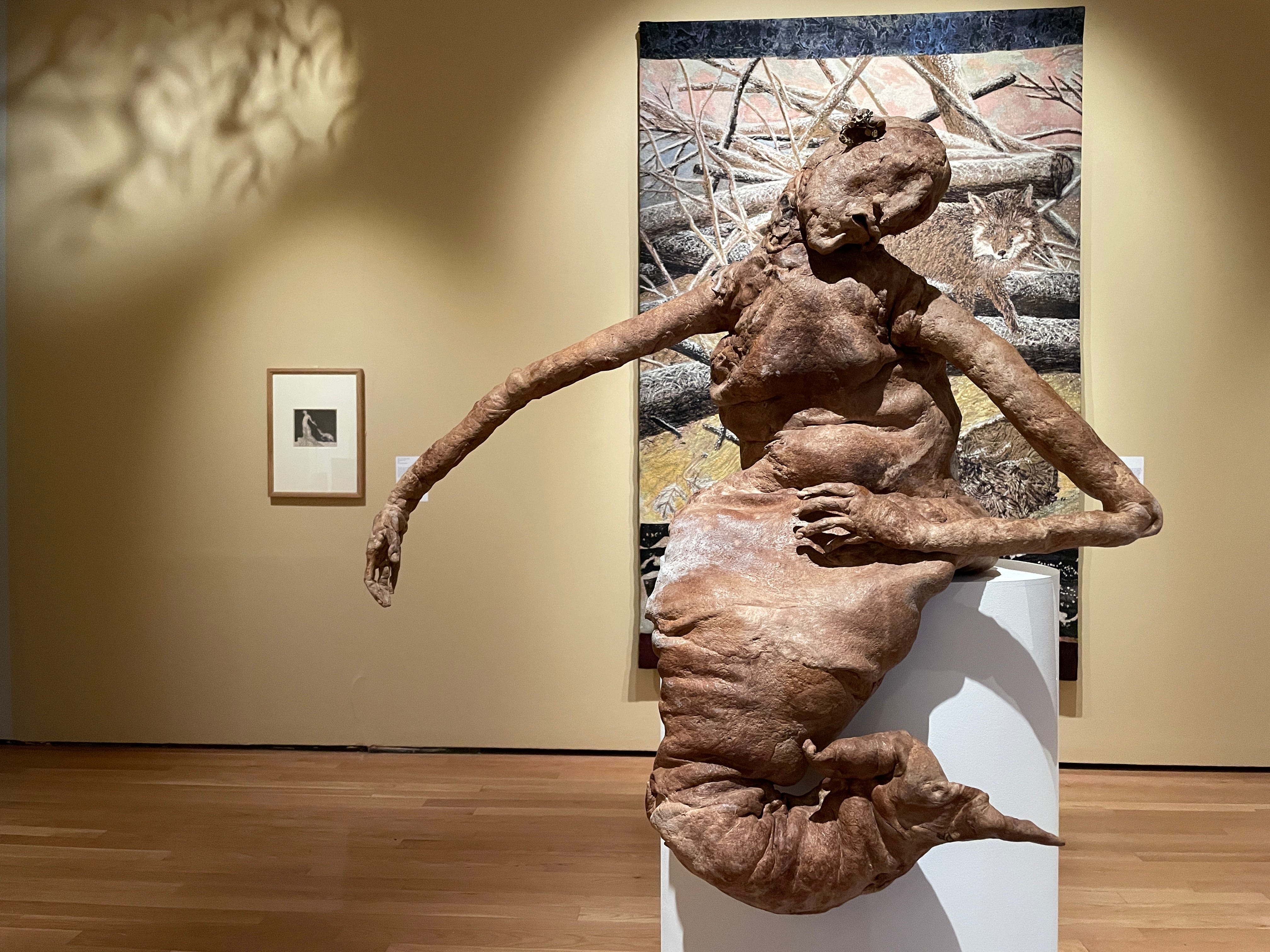
👉🏼 A nice thing: The cultural historian and mythographer Marina Warner has curated an exhibition at Compton Verney in Warwickshire called ‘The Shelter of Stories’, and it is absolutely wonderful. From textiles to Punch and Judy puppets, storytelling board games to Paula Rego engravings, masks to myth and legend, it is chock-full of magic and inspiration. My favourite piece was Francis Uprichard’s tactile and unsettling sculpture of a siren, with its echoes of bog bodies, but honestly, the whole thing was so brilliant, and so well curated, that it does it a disservice to pick things out individually. Compton Verney also houses a truly wonderful collection of folk art, so if you go, make sure you see that too. The Shelter of Stories is on until February 22.
👉🏼 An interesting thing: I don’t read a lot of nature writing these days; quite honestly, I find much of it unoriginal and sometimes self-indulgent – but when several people I respect tell me I really must read something, I do listen. And when it comes to The Cuckoo’s Lea by Michael J Warren I’m very glad I did: subtitled ‘The forgotten history of birds and place’, it’s an exploration of English place-names and their connection to birds, from cranes to cuckoos, kites to nightingales. Unfolding as a twinned exploration of topography and ecology, it’s written with an archivist’s intellect and a poet’s ear.
👉🏼 A thing that made me go ‘hmm’: On the way back from Compton Verney my friend and I stopped at Nature In Art, a collection housed at Wallsworth Hall in Gloucester. Lacking the vast wealth of Littlewoods heir Sir Peter Moores – which is what makes Compton Verney possible – it’s a very different proposition, so in some ways it feels a little unfair to compare the two. But if a gallery’s rather dated core collection consists of of paintings of lions and elephants, sculptures of rare birds, Victorian botanical watercolours and the like, it seems important that the labels and general curation should engage bravely and directly with species loss, colonialism, climate breakdown and the changing ways in which people understand and relate to nature. Perhaps Nature In Art’s temporary exhibitions and activities do this – at least I hope so – but it should be part of the context of the entire place.

That’s it for the first, free part of this issue of Witness Marks; below the paywall you’ll find the Village News, including an unfortunate event at Midnight Mass on Christmas Eve, thatch controversy, and a shocking new class at the Village Hall.
If you don’t want to subscribe but you’d still like to support my various endeavours, you can leave me a tip by going here. Thank you!