To stop here at nothing
June's light nights, the 'soft cuckle' of day-singing nightingales and, in the Village News, corpse controversy at the National Gardens Scheme
Hi, how are you doing?
Welcome to the June edition of Witness Marks. If you’re new here and would like a quick tour of the village (and the newsletter), start by reading this post here.
And in case you missed it, I was featured in India Knight’s HOME a couple of weeks ago, giving readers a tour of my desk with its many strange wonders. You can catch up here – it’s free to read for the next few days:

Witness Marks goes out on or around the 15th of each month; in between times you can find me chatting away in Substack Notes. The first part is free, while the second part, the Village News, sits below a paywall. A subscription to that costs £3.50 a month if you pay via Substack Desktop (Apple and Google add a bit on top if you pay via the app). Paying subscribers can also access all the back issues of Witness Marks, AND they can listen to me read out and discuss my first novel, Clay.
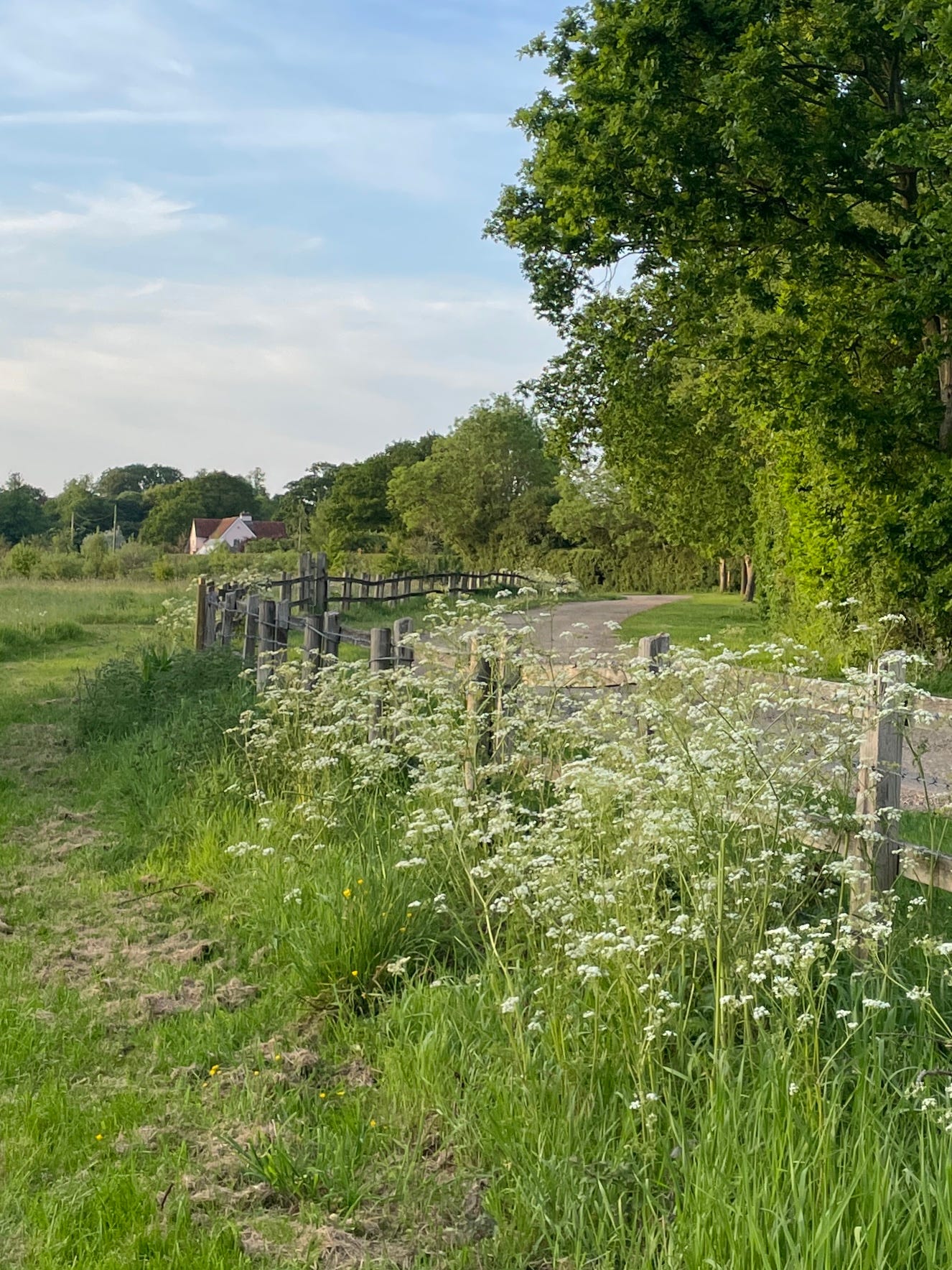
Last night I was tired, and stopped reading early. I switched my bedside light off and began to fall into sleep. When I turned over my eyes must have flickered open, because I saw there was a bright glow around my bedroom curtains. In a village with no street lights this usually means a full moon (which I knew it wasn’t), or that Violet across the road’s security light has been triggered – or, in rare cases, that I’ve switched my porch light on and forgotten to turn it off again. I got out of bed and parted the curtains only to find that despite it being well past 10.30pm it just wasn’t dark yet, the midsummer sun only 7.5° or so below the horizon looking north (as my bedroom window does). It’s June, and we’re very nearly at the longest day.
Of course, June’s light nights should not have come as a surprise, but I’ve been travelling a lot the last few weeks and I don’t feel as tuned in to my cottage, the village and its seasons as I normally do. Added to that, the weather took a stormy turn, with thunder day after day and some heavy downpours that the farmland fields drunk up but which spoiled the June roses, making them blotch and droop. There were even a couple of evenings when I got under the electric blanket to watch telly (there are no medals for martyrdom in this house). Between one thing and another the sense of things building inexorably to the natural year’s dizzy climax has rather been lost.
Haymaking began on what counts here as ‘high ground’, and then stopped again when the weather turned wet. Within a few days a bright green aftermath had begun to appear on the few mown fields, which – if rain and sunshine continue together – might well offer up a second cut this year. I wonder if this weekend will be enough of a weather window for more farmers to make a start on their hay.
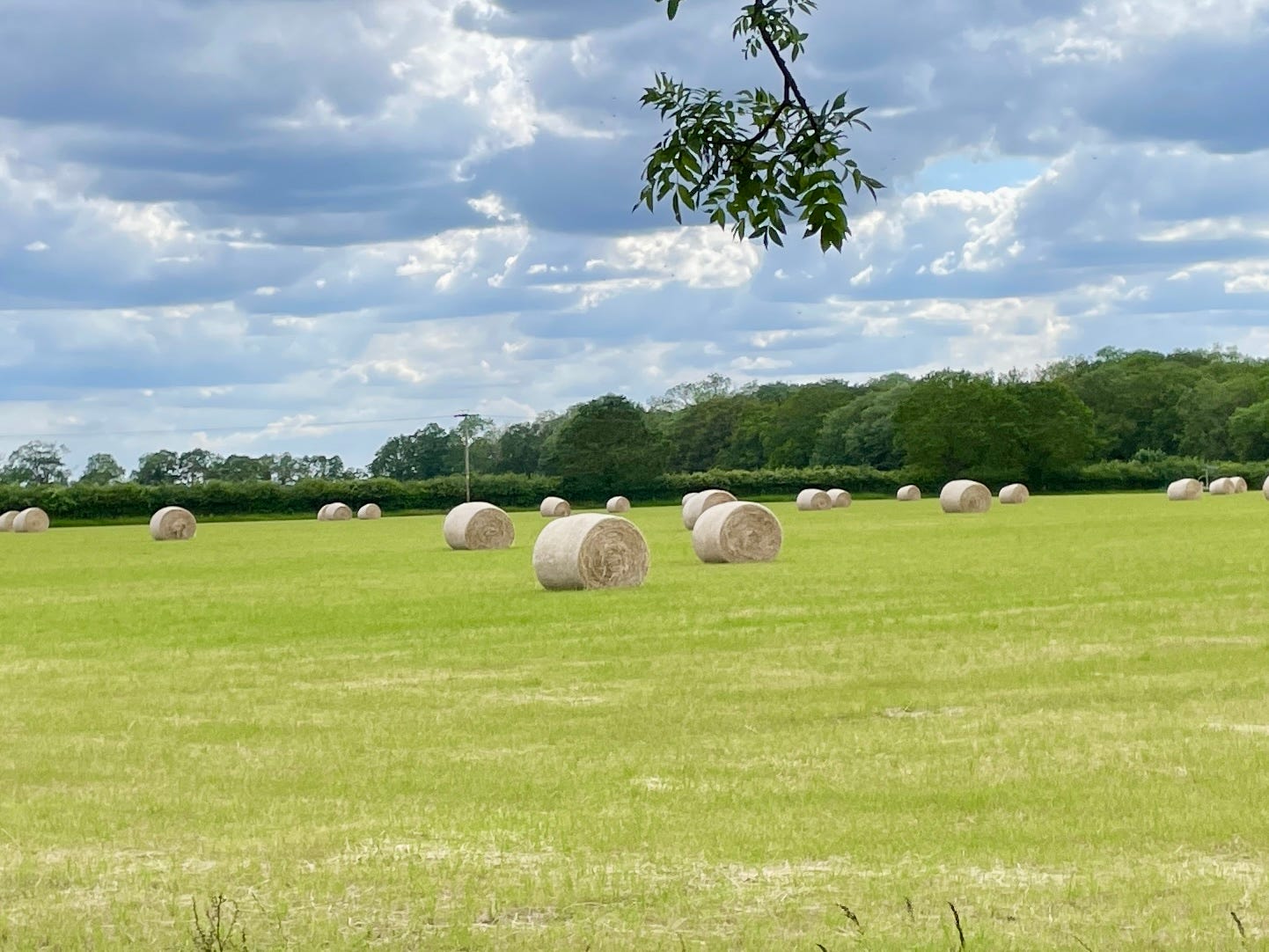
Elsewhere, our local barley is developing fine green awns and shifting in the breeze, while the wheat is still stiff and ‘blue’, dotted with the crimson spots of corn poppies here and there. We have two fields sown this year to a conservation mix, this time dominated by the blue flowers of phacelia. Bees love it, birds eat the seeds and it’s a great soil improver, fixing nitrogen and suppressing weeds. Further afield there are a few acres of potatoes which are putting out their purple and yellow flowers. I’m glad the rain has come while the crops are still growing; I hope it will contribute to a good arable harvest and perhaps mean less abstraction from rivers (though I did see the irrigators out a couple of weeks ago, not that far away). As the seasons change, and the weather becomes less predictable (and more prone to extremes) what’s already an incredibly difficult job becomes even harder and more precarious for those without deep pockets. And in the face of growing food insecurity and the environmental depredations of agribusiness we really need our smaller, mixed family farms to survive.
By mid-June most nightingales have paired and the males’ night-time performances have ceased – all but those unlucky few who have failed to find a mate and sing on after dark, hopeful and lonely. Around the village they can still be heard by day, now and again – brief snatches and phrases, nothing like the outpourings of May. When I hear them by day I always think of R. F. Langley’s visually, taxonomically and rhythmically precise Suffolk-set poem, with its quiet subversion of Keats:
To a Nightingale
Nothing along the road. But
petals, maybe. Pink behind
and white inside. Nothing but
the coping of a bridge. Mutes
on the bricks, hard as putty,
then, in the sun, as metal.
Burls of Grimmia, hairy,
hoary, with their seed-capsules
uncurling. Red mites bowling
about on the baked lichen
and what look like casual
landings, striped flies, Helina,
Phaonia, could they be?
This month the lemon, I’ll say
primrose-coloured, moths, which flinch
along the hedge then turn in
to hide, are Yellow Shells not
Shaded Broad-bars. Lines waver.
Camptogramma. Heat off the
road and the nick-nack of names.
Scotopteryx. Darkwing. The
flutter. Doubles and blurs the
margin. Fuscous and white. Stop
at nothing. To stop here at
nothing, as a chaffinch sings
interminably, all day.
A chiff-chaff. Purring of two
turtle doves. Voices, and some
vibrate with tenderness. I
say none of this for love. It
is anyone’s giff-gaff. It
is anyone’s quelque chose.
No business of mine. Mites which
ramble. Caterpillars which
curl up as question marks. Then
one note, five times, louder each
time, followed, after a fraught
pause, by a soft cuckle of
wet pebbles, which I could call
a glottal rattle. I am
empty, stopped at nothing, as
I wait for this song to shoot.
The road is rising as it
passes the apple tree and
makes its approach to the bridge.

In terms of book news it’s been all go since The Given World was published last month. I’ve done nine events so far, with six more to come – including one at Katie Clapham’s very own Storytellers on July 6th (and not long after that we’ll be into festival season!). I’ve been on the radio and in the newspapers, and the book has been reviewed in the Guardian, The Times, the Financial Times, The Spectator, Caught by the River and The Tablet. Honestly, it’s a wonder you’re not all sick to death of it, and me! If you're one of the lovely people who have come to one of my events, thank you so much – your support has been absolutely wonderful.
And speaking of reviews, I wrote about Maggie O’Farrell’s new novel, Land, for the Guardian. I didn’t like it much, though I know lots of people really enjoy what she does. You can read my piece here. Fiona Mozley also reviewed it, in her case for the New York Times: ‘The problems with Land stem from its reluctance to question the moral clarity of its core characters. They are all unimpeachably good… [Land] is deflated by characters whose confrontations with the forces around them are too shallow to constitute a serious reckoning with the moral dilemmas the novel poses at the start.’
I also wrote my usual ‘Nature Notebook’ for The Times, this time about giant wood wasps, skylarks at London City Airport, and the sandy, litter-blown verge of the A12 not far from my house (it’s nicer than it sounds, honestly!). You can read that here.
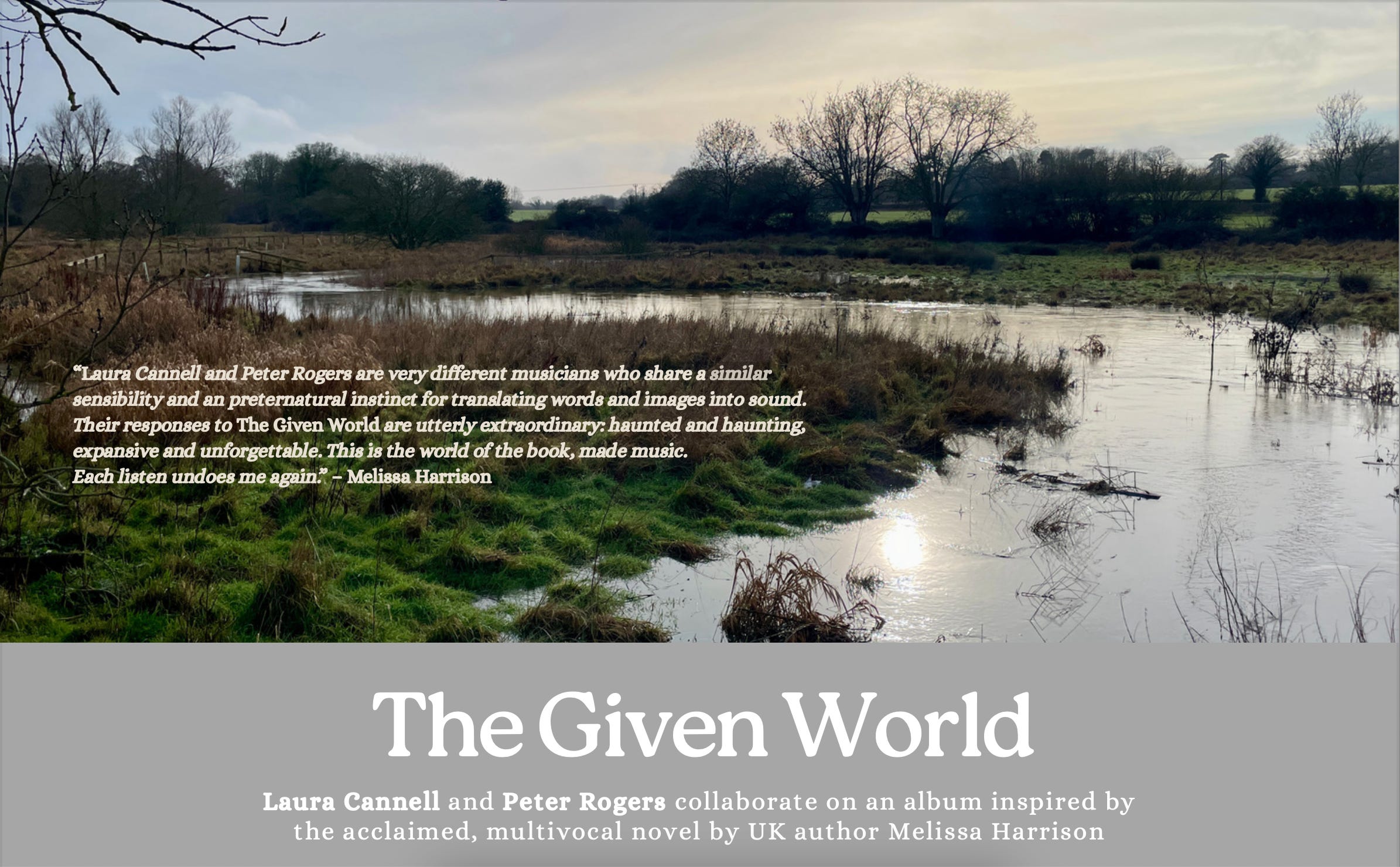
A little tease, above, for an exciting thing that’ll be happening on July 17th: Peter Rogers, who produced, starred in and wrote the music for ‘The Stubborn Light of Things’ podcast, and the composer, performer and multi-instrumentalist Laura Cannell, have collaborated on some music that creates a vivid soundscape for The Given World – and I know I would say this, but it is absolutely incredible. There’ll be a limited run of CDs and it’ll be available online to download. Follow Peter on Bandcamp to receive an alert when it comes out.
Three things that aren’t on screens
Each month I collect together three things that have interested me, for good or ill, and which can be found in the world beyond your phone or laptop:
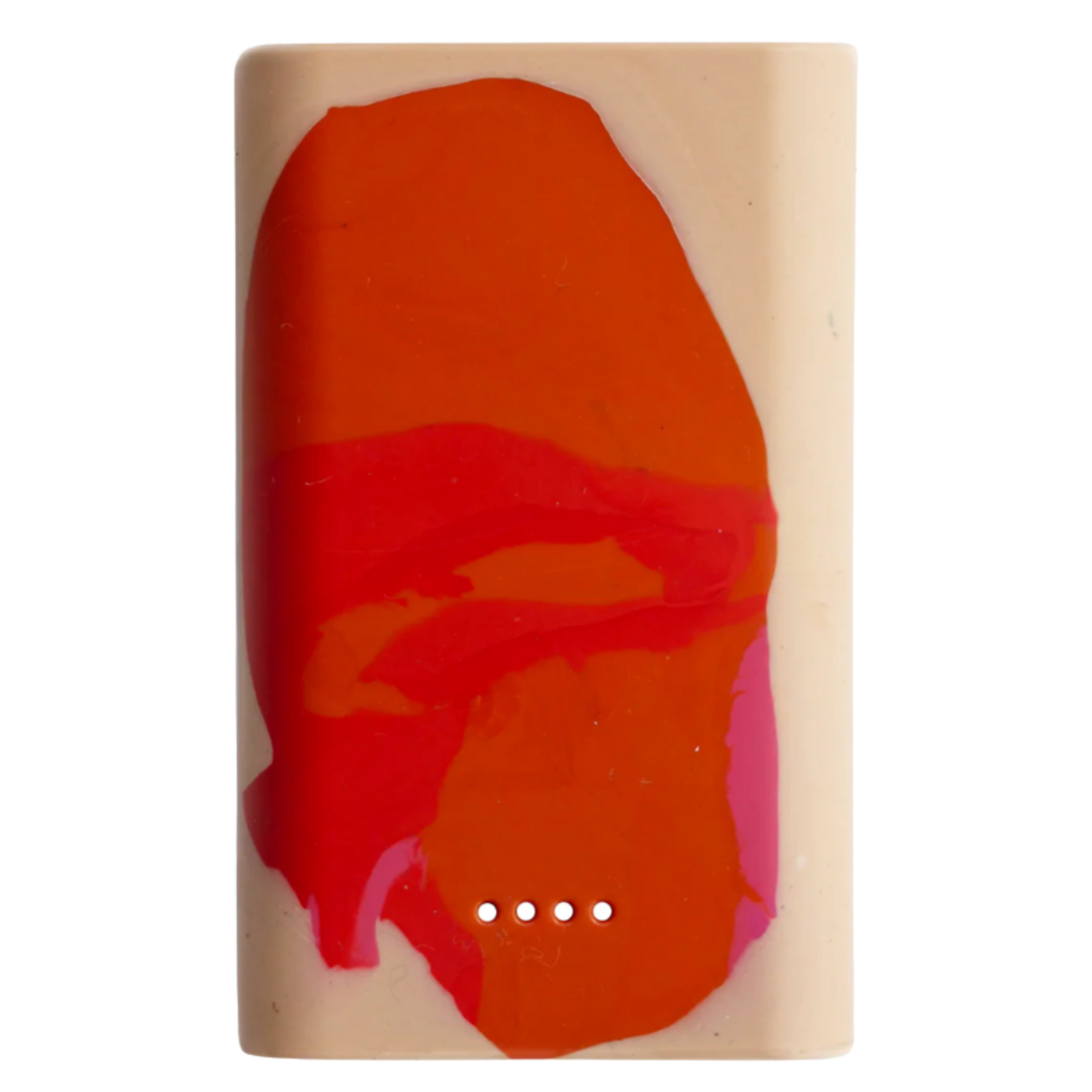
👉🏼 A nice thing: Gomi are a small, Brighton-based company making sustainable and fully repairable power banks (below), phone chargers, cables and speakers from recycled beach plastic and repurposed e-bike batteries. Not only is it well made and genuinely ethical but their stuff is pretty gorgeous to look at, too, and you can even have your items personalised. Find out more at gomi.design.
👉🏼 An interesting thing: I can’t remember who told me about Juliet Nicolson’s The Book of Revelations: Women and Their Secrets from the 1950s to the Present Day – I think it was someone on Substack, so thank you if it was you. I listened to the audiobook and was hooked. Divided into three sections, ‘My Mother’s Generation’, ‘My Generation’ and ‘My Daughter’s Generation’, it’s a careful, thorough and ultimately revealing account of the pressures and restrictions women have been placed under and are still placed under in a male-dominated society: the details may change, but the effects remain the same. It’s a fascinating lens through which to look at class, too.
👉🏼 A thing that made me go ‘hmm’: Shopping for an eyebrow pencil the other day (stay with me) I was irritated to discover how hard it is to find a wooden one that you sharpen, rather than one encased in a plastic tube. I found one in the end (thank you, Rimmel) but it got me thinking about how hideously reliant on plastic the cosmetics industry is and how un-recyclable most products are, either because they’re made of mixed materials (eg mascara spoolies, bottle pumps, lipstick tubes), contain solvent residue (glass nail polish bottles), are made of black plastic (loads of brands have black packaging) or are so small they’re mechanically filtered out at the recycling centre and sent for incineration or landfill (lip balm tubes, mini pots, lids). Both Boots and Superdrug have take-back schemes which send items for manual processing; look for the cardboard bins in shops. However, they ask that the packaging is clean and empty, which with hydrophobic products like foundation can be damn-near impossible to achieve. I don’t know what the answer is, but I increasingly feel when I’m buying make-up that I’m going ‘La la la’ and sticking my fingers in my ears, which I don’t like.

Anyway, back to nice and interesting things: the Suffolk artist Spadge Hopkins has been hard at work making a series of limited-edition steel bird sculptures based on the species mentioned in my novel All Among the Barley, from the nightingale (above) to the peewit (aka lapwing), the landrail (aka corncrake), dorhawk (aka nightjar), swift, yellowhammer, fieldfare and long-tailed tit. The sculptures are on sale through Suffolk Wildlife Trust and at Orford Quay from 15th to 21st June, Snape Maltings (Quay Gallery), 30th July to 5th August and at the Festival of Nature launch at Seckford Theatre on Sunday 20th September. Best of all, £50 from each sculpture will go towards Suffolk Wildlife Trust’s Mission 2030 campaign to bring nature back to Suffolk. Find out more, and order a sculpture, here.
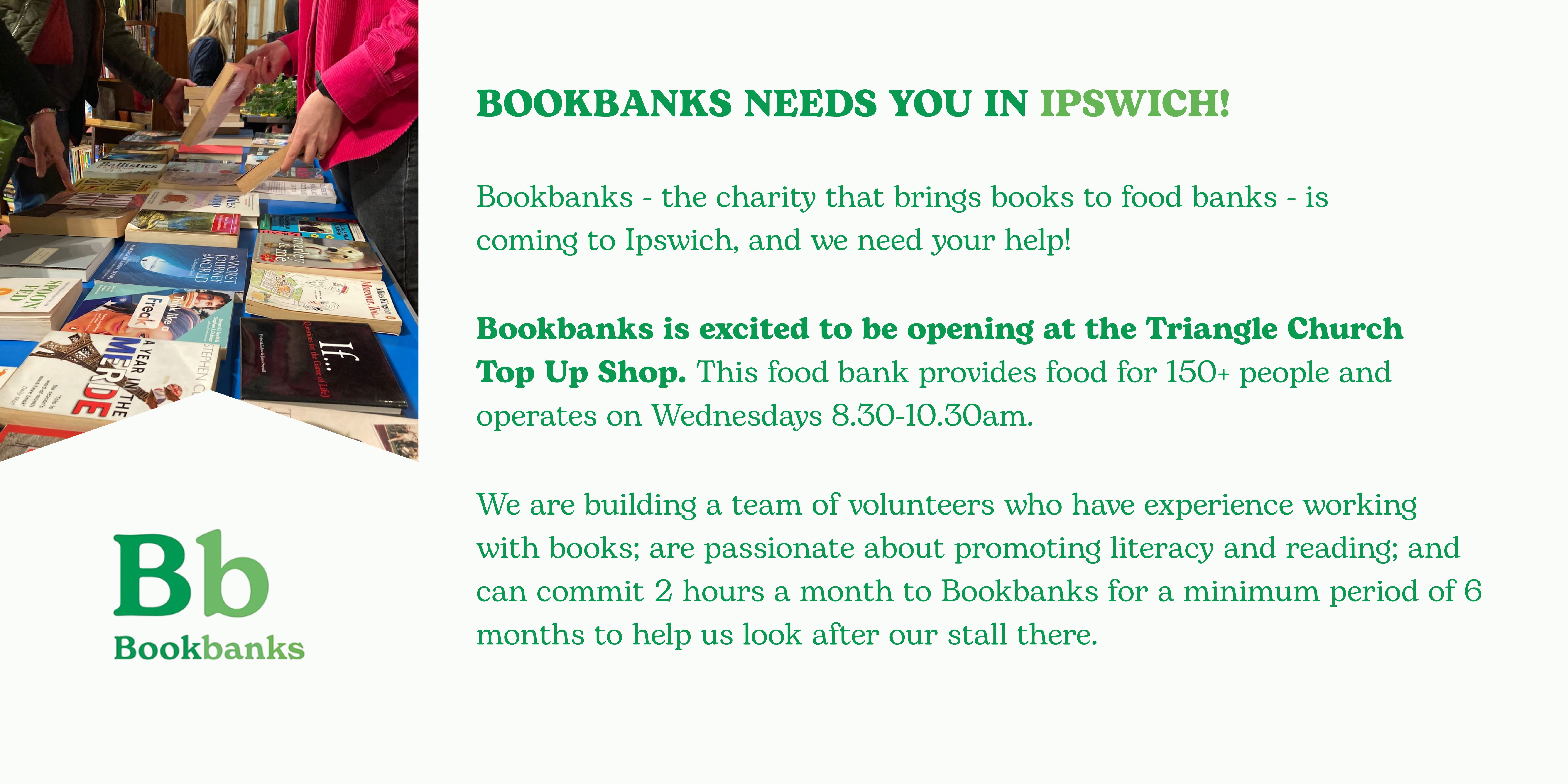
Do you remember Bookbanks, the brilliant new charity I wrote about a few months ago which is working to get free books into food banks? It’s been going from strength to strength, powered by the impressive energies of writer Emily Rhodes. Now the team are opening a new branch in Ipswich, and they need more local volunteers. Could that be you? If so, apply here. And if you want to help them reach their goal of 30 bookbanks giving out books to low-income families by 2030, you can donate here.

That’s it for the first, free part of this issue of Witness Marks; below the paywall you’ll find the Village News, including SNAKE PERIL, CAKE MYSTERY, NATIONAL GARDENS SCHEME CORPSE CONTROVERSY and MAN IN FLAT CAP AND TRANSITIONS LENSES RIDES MINIATURE STEAM ENGINE ON CHILLY DAY (short film).
If you’d like to subscribe but £3.50 feels like a stretch, reply to this email (if you’re reading this in your inbox) or send me a private message on the Substack website. No questions asked.
If you don’t want to subscribe but you’d still like to support my various endeavours, you can leave me a tip by going here; or you can donate to support the free Encounter app by going here.
Thank you so much, either way!